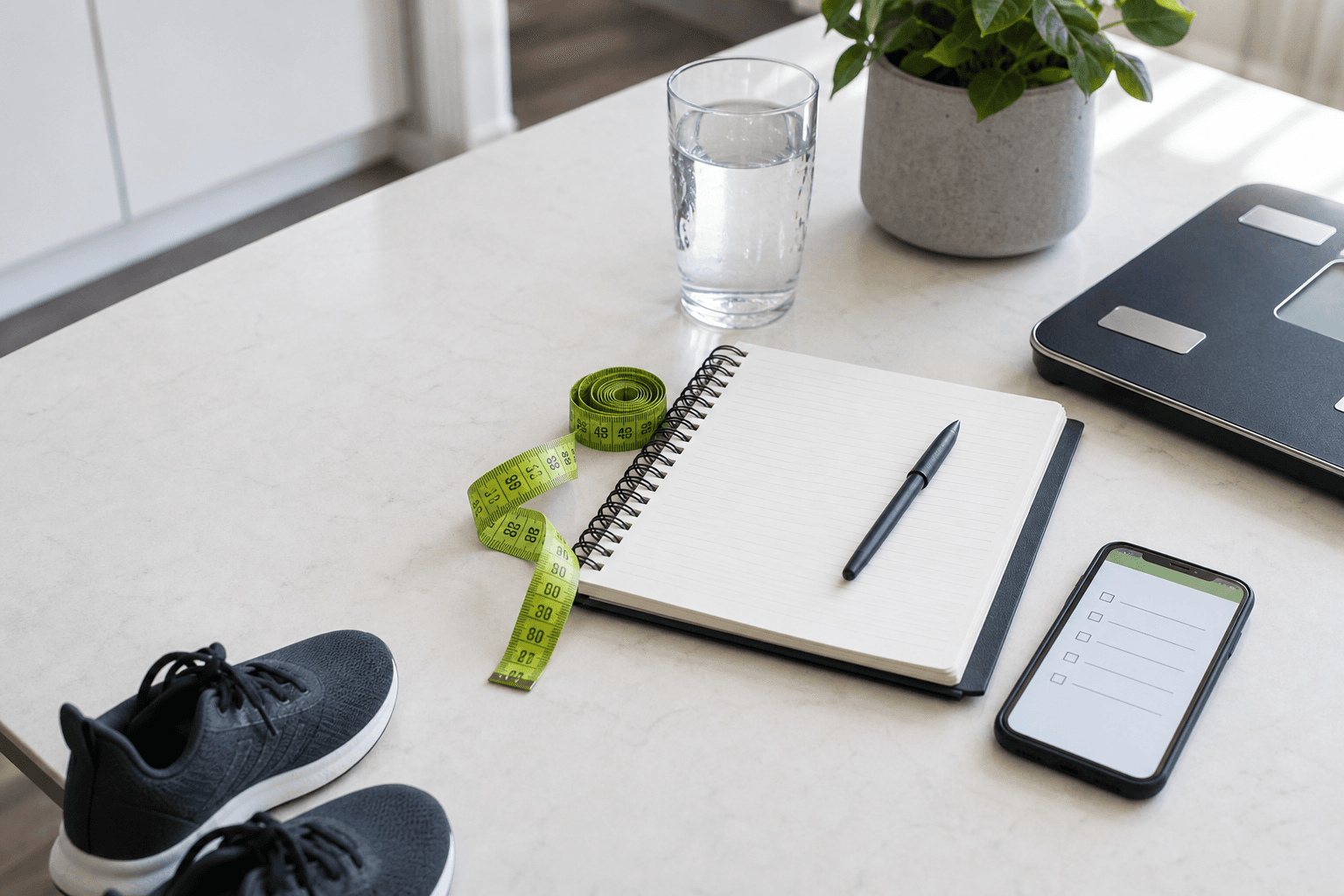
Weighing and measuring every bite works for some people and feels unbearable for others. The good news is that you can keep portions reasonable without a food scale at all. A few visual and structural habits do most of the job, and they travel with you everywhere a scale cannot.
Use your hand as a guide
Hand-based portions scale roughly with body size and are always available: a palm of protein, a fist of vegetables, a cupped hand of carbs, a thumb of fats. It is not laboratory precise, but it is consistent and practical enough to matter.
Let the plate do some work
Filling half the plate with vegetables, a quarter with protein, and a quarter with carbs gives a balanced default without any numbers. Using a slightly smaller plate can also gently reduce portions without any sense of deprivation.
Slow down to catch fullness
Eating quickly makes it easy to overshoot before fullness registers. Slowing down, and pausing before automatically going back for seconds, lets your body weigh in on whether you actually need more.
Watch the calorie-dense extras
Portion awareness matters most for the dense add-ons, oils, dressings, nut butters, cheese, and sauces, which are easy to pour freely. A little attention to those goes further than obsessing over the size of your vegetables.
Run a two-week experiment
Treat this as a small experiment rather than a permanent rule. Start with one action from the checklist: Use hand-based portions as a portable, consistent guide. Put it in a specific time and place, and make the minimum version easy enough to complete on a difficult day. Do not overhaul the rest of your routine at the same time.
Keep a brief record of what happened, including the situation, the action you took, and one outcome that matters for this topic. At the end of two weeks, keep what made life easier, revise what created friction, and drop what provided no useful benefit. A modest test produces better information than a dramatic three-day push.
Put the advice into practice
Calibrate one meal at a time. Plate a usual portion, compare it with a hand guide, label serving, or measured reference, then adjust only the element that seems out of scale. Keep vegetables and lean protein generous enough for satisfaction while paying closer attention to oils, spreads, cheese, sweets, and other compact sources of energy.
Measure the signal that matters
Notice whether the portion carries you comfortably to the next planned meal and whether the overall weight trend matches your goal. If you are hungry immediately, the answer may be more protein, fiber, or volume rather than simply more of everything. If progress stalls, recheck the calorie-dense extras first.
Know the limits and safety boundaries
Hand and plate methods are estimates, and hand sizes differ. They are meant to reduce friction, not create a precise prescription. Athletes, pregnant people, growing adolescents, and people with diabetes, kidney disease, gastrointestinal conditions, or an eating-disorder history may need individualized guidance rather than a generic plate formula.
A simple way to start
- Use hand-based portions as a portable, consistent guide.
- Build the plate as half vegetables, quarter protein, quarter carbs.
- Go easy on calorie-dense extras like oils and dressings.
Common questions
What if I am still hungry after the suggested portion?
Pause long enough to notice the signal, then eat more if you are hungry. Consider adding protein, vegetables, fruit, soup, or another filling component. Portion awareness should help you respond deliberately; it should not become a rule that requires ignoring genuine hunger.
Can I use package serving sizes as my portions?
A serving size describes the amount used for label information; it is not necessarily a recommendation for you. Use it to understand scale and compare products, then choose an amount based on the full meal, your needs, and your goals.
When is personalized nutrition guidance worth getting?
Talk with a registered dietitian or clinician when you have diabetes, kidney disease, gastrointestinal disease, food allergies, a history of disordered eating, are pregnant, or need a plan that coordinates with medication. General portion and meal ideas cannot account for those individual needs.
Put this into practice
Sources and further reading
- NIDDK: Food Portions—Choosing Just Enough for You
- NIDDK: Health Tips for Adults
- CDC: Steps for Losing Weight
What to watch
You can manage portions perfectly well without ever owning a food scale. A few visual habits, applied consistently, keep things reasonable, and they work just as well at a restaurant as at home.