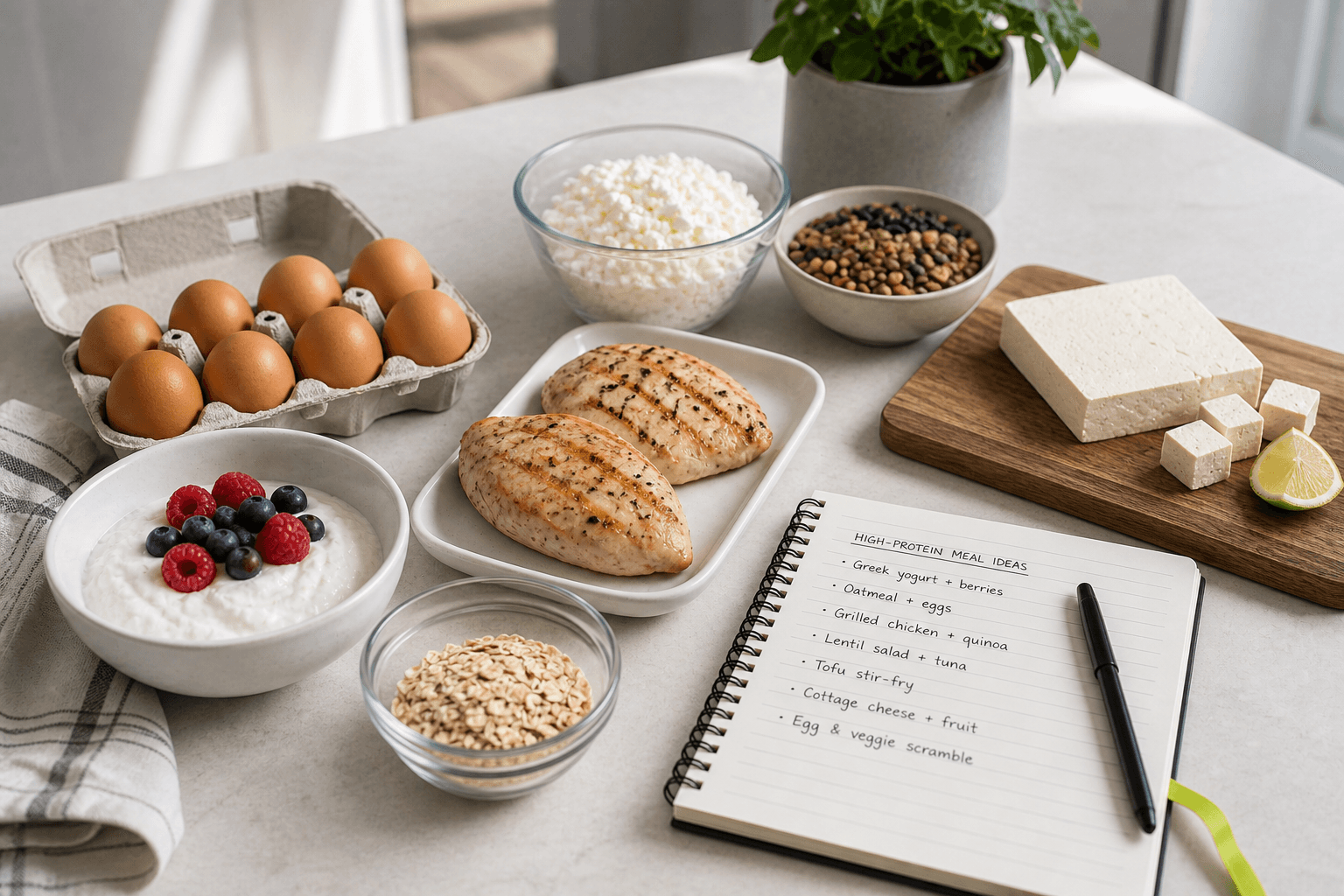
Protein matters during weight loss because it can make meals more satisfying and help support lean tissue while body weight changes. Those are useful advantages, but they do not turn protein into a fat-burning shortcut. Total intake, food quality, activity, sleep, and consistency still shape the result.
Most readers do not need a bodybuilder diet or a kitchen full of powders. The practical goal is to stop letting main meals arrive with almost no protein and then trying to repair the day with a giant dinner.
What protein is good at
Research generally suggests that higher-protein eating patterns can improve fullness for some people and may modestly support weight management. The evidence is not a promise that more is always better, and studies use different definitions of “high protein.” The useful takeaway is simpler: a credible protein source can give a meal more staying power.
Protein also supplies amino acids used throughout the body. When weight loss is paired with resistance training and adequate protein, the plan is better positioned to preserve muscle than a crash diet built mostly around eating less.
Think in meal anchors before daily totals
Start by asking what the protein anchor is at breakfast, lunch, and dinner. Eggs, Greek yogurt, cottage cheese, beans, lentils, tofu, tempeh, fish, poultry, lean meat, and other foods can all fill that role. The answer does not need to be the same every day.
Spreading protein across meals is usually more comfortable and practical than trying to force most of it into dinner. It also creates three chances to build a satisfying plate instead of expecting one heroic meal to compensate for a day of snack food.
Use a range, not a perfect number
Protein needs vary with body size, age, activity, overall diet, and health. Online formulas can only provide a broad starting point. Use the site’s protein tool as an educational range, then judge whether the meals are realistic, satisfying, and compatible with guidance from your health professional.
If numbers make eating more stressful, skip the calculation and use the visual rule: include a recognizable protein food at each main meal, vary the sources, and adjust portions based on hunger and the rest of the plate.
What a protein-forward day can look like
Breakfast could be Greek yogurt with fruit and oats, eggs with toast and vegetables, or tofu with potatoes. Lunch could be a bean-and-chicken bowl, tuna with a grain salad, or lentil soup plus yogurt. Dinner could be fish, tofu, poultry, lean meat, or legumes with produce and a satisfying carbohydrate.
This is a menu illustration, not a prescription. The point is that protein shows up inside normal meals. A shake can be convenient when time is tight, but it does not have to replace food or become proof that the day was “good.”
Common ways people make protein harder than it needs to be
The first mistake is chasing the highest possible number. The second is choosing protein foods that make the rest of the diet unpleasant or unaffordable. The third is ignoring calories from sauces, cooking fats, bars, and shakes because the label says protein.
A better system uses foods you like, prices you can sustain, and preparation methods that work on tired days. Frozen fish, canned beans, rotisserie chicken, yogurt cups, eggs, tofu, and other shortcuts can be more useful than an aspirational meal plan you never cook.
Protein does not replace fiber, plants, or total intake
A plate can be high in protein and still be low in produce, fiber, or overall variety. Pair the protein anchor with fruit, vegetables, beans, whole grains, potatoes, or other foods that make the meal nutritionally broader and physically more satisfying.
Protein calories still count. Adding shakes and bars on top of an unchanged eating pattern may increase intake rather than improve it. Use protein to reshape meals, not simply to add another product.
Who should get individualized guidance
People with kidney disease, significant liver disease, metabolic disorders, pregnancy, eating-disorder history, or other conditions that change nutrition needs should not use a generic online target as a personal prescription. A clinician or registered dietitian can help set an appropriate amount and choose suitable sources.
The same caution applies if a high-protein plan causes persistent digestive problems, crowds out most other foods, or makes eating feel rigid and fearful. More protein is not automatically better protein planning.
Make the next three meals more useful
- Name the protein anchor before deciding what else belongs on the plate.
- Pair it with at least one produce or fiber-rich food.
- Choose a portion that leaves the meal satisfying without becoming a contest.
- Keep one fast backup such as yogurt, eggs, tofu, canned fish, beans, or cooked poultry.
- Notice whether the meal keeps you steadier until the next planned eating time.
Common questions
Do I need protein powder?
No. Powder is a convenience option, not a requirement. If ordinary food covers your meals comfortably, there is nothing missing that a shake must fix.
Is plant protein enough?
Plant foods can contribute substantially to protein intake. Using a variety of beans, lentils, soy foods, grains, nuts, and seeds helps create a broader amino-acid and nutrient mix. Individual needs may warrant dietitian guidance.
Will more protein cause weight loss by itself?
No. Protein may make a calorie deficit easier to sustain, but it does not override total intake. It works as part of a complete eating and activity pattern.
Put this into practice
- Estimate a practical protein range with the free tool
- Build a calmer food system
- Read the beginner strength-training guide
Sources and further reading
- CDC: Tips for Healthy Eating for a Healthy Weight
- Systematic review: Dietary protein and appetite sensations
- Systematic review: Increased protein and body-weight management
Keep protein in its proper role
Protein is helpful, not magical. It works best inside a routine that also respects meal timing, food quality, total intake, movement, and individual health needs.
The most useful protein plan is rarely the most impressive one. It is the one that makes ordinary meals easier to repeat and does not require you to organize your life around a macro target.