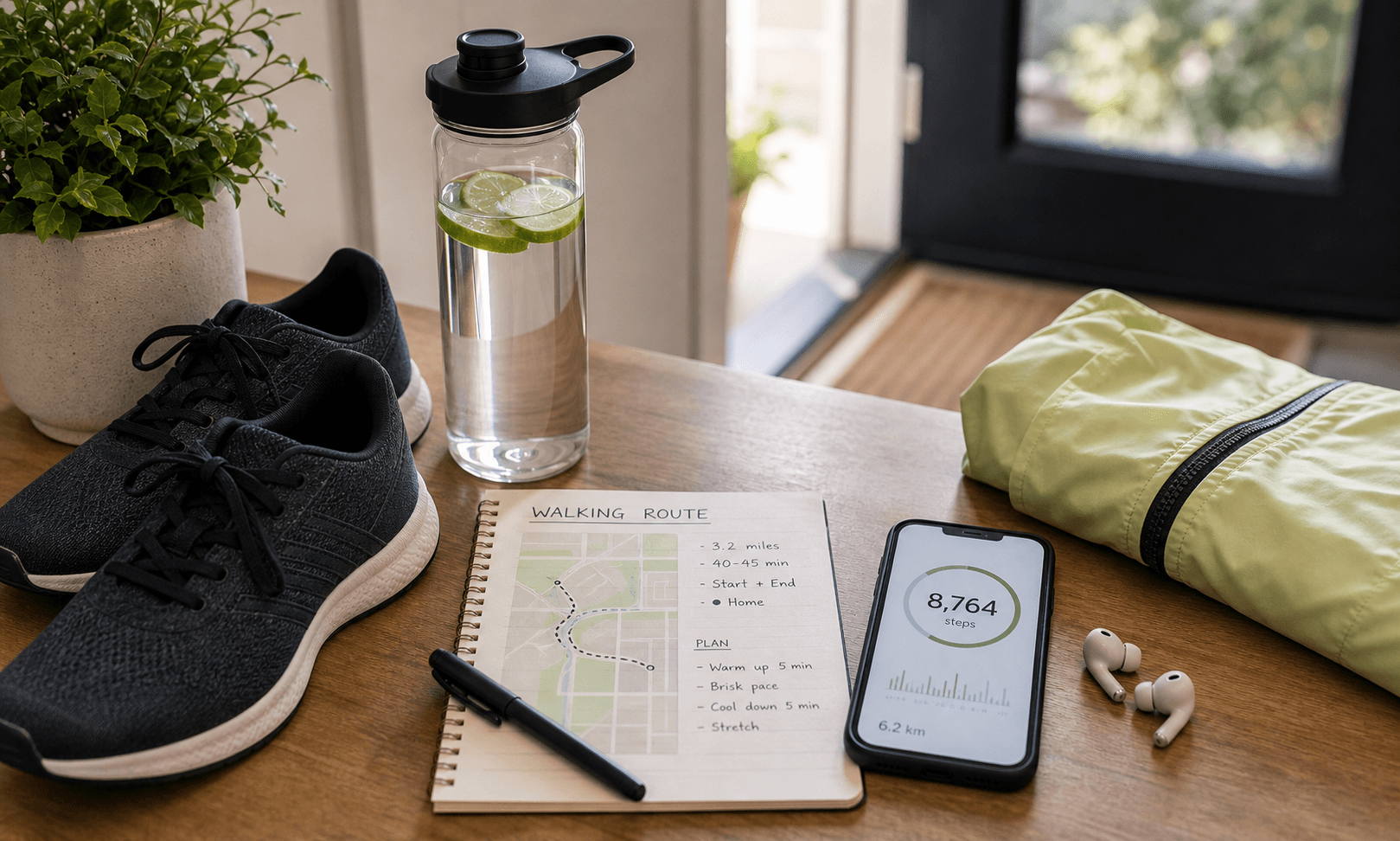
Walking gets dismissed because it is not dramatic. That is a mistake. A movement plan that fits real life often beats the perfect workout split that only survives one motivated week.
Walking can increase weekly activity, reduce long stretches of sitting, and create a reliable routine with a relatively low recovery cost. It is not a guaranteed weight-loss machine, and calorie-burn estimates are rough. Its advantage is that many people can repeat it often enough for it to matter.
Why walking works so well
Walking requires little setup, can be divided into short blocks, and usually creates less soreness than harder training. That makes it easier to keep on stressful weeks, when an all-or-nothing workout plan might disappear completely.
Federal activity guidance emphasizes moving more and sitting less. Adults can gain benefits from activity below the full weekly guideline, especially when they are starting from very little. The long-term target is useful, but it is not a minimum score you must hit before a walk counts.
Start from your actual baseline
Do not begin with an arbitrary 10,000-step demand. For one normal week, record walking minutes or steps without trying to impress yourself. Use the average as the starting line. Then add a small amount that fits your schedule and recovery.
Someone currently walking ten minutes twice a week needs a different plan from someone already averaging forty minutes most days. A baseline keeps the next step honest and gives you something concrete to improve.
Use minutes, steps, or routes—whichever creates less friction
Minutes work well if you can reserve blocks on a calendar. Steps work well if a phone or watch already tracks them. A fixed route works well if numbers make the habit feel like homework. The measurement method is only useful if it helps you repeat the behavior.
Short walks count. Three ten-minute walks may fit a workday better than one uninterrupted half hour. Attach them to events that already happen—after lunch, after dinner, during a call, or before the commute home.
A four-week progression that stays conservative
During week one, simply establish the baseline and pick dependable walking windows. In week two, add a short block on two or three days. In week three, lengthen one or two walks slightly if recovery feels normal. In week four, repeat the week rather than increasing again automatically.
This is an example, not rehabilitation advice. Keep increases smaller if walking is new, body weight is higher, terrain is challenging, or joints and feet need more time. A plan that causes pain or changes your gait needs adjustment, not grit.
How hard should a walk feel?
Most walks do not need to feel like a test. At a moderate effort, breathing is faster but conversation is still possible. Easy walking is also valuable, especially for building frequency, breaking up sitting, or recovering between harder sessions.
Hills, speed, and longer routes can increase difficulty, but change one variable at a time. Adding distance, pace, and incline together makes it difficult to understand why soreness or fatigue suddenly appeared.
Make the plan survive weather and busy days
Create a full version and a minimum version. The full version might be a thirty-minute neighborhood walk. The minimum might be ten minutes indoors, several laps through a building, or brief walking breaks across the day. The minimum keeps the routine alive when conditions are poor.
Shoes should be comfortable and appropriate for the surface; premium gear is not required. For low light, use visible clothing and safer routes. In heat, cold, or poor air quality, change the time, location, or intensity rather than treating the original plan as mandatory.
Walking and weight loss are not a simple calorie equation
Devices estimate calorie burn using imperfect assumptions. Treat those numbers as rough, not as food credits you must eat back or proof that a session succeeded. The more reliable signals are completed minutes, increased weekly movement, improving comfort, and whether the routine supports the rest of your plan.
Walking works best alongside an eating pattern you can maintain and some form of muscle-strengthening activity. Federal guidance recommends both aerobic and muscle-strengthening work for general health, but beginners can build toward that combination gradually.
When to slow down or get help
Stop and seek medical help for chest pressure, fainting, severe shortness of breath, or other alarming symptoms. Persistent joint or foot pain, repeated falls, or symptoms caused by a known medical condition deserve professional guidance before you keep progressing.
If balance, mobility, or injury history makes ordinary walking difficult, a clinician or physical therapist can help identify a safer starting point. Modification is part of a good plan, not evidence that walking “does not count.”
Build next week’s walking plan
- Record your current weekly minutes or average steps before increasing anything.
- Choose three specific walking windows tied to routines that already happen.
- Write down a minimum version for rain, travel, or overloaded days.
- Increase only one variable—frequency, duration, pace, or hills—at a time.
- Repeat a successful week before deciding that the plan must become harder.
Common questions
Do I need 10,000 steps a day?
No universal step target fits every person. Start from your present activity and build upward. Minutes, routes, and regular walking breaks can work just as well as a round step number for organizing the habit.
Is one long walk better than several short walks?
Both can contribute to weekly activity. Choose the pattern you can repeat. Short blocks are especially useful when schedule, fitness, or joint tolerance makes a long session less realistic.
Should I walk every day?
Daily easy walking is manageable for many people, but it is not mandatory. Your current fitness, symptoms, terrain, footwear, and other training affect recovery. Build frequency gradually and respond to pain rather than forcing a streak.
Put this into practice
- Build a weekly plan with the free walking tool
- Read the beginner strength-training guide
- Browse practical training guides
Sources and further reading
- HHS: Physical Activity Guidelines for Americans
- HHS Move Your Way: Activity Planner
- HHS: Key facts from the Physical Activity Guidelines
Consistency is the advantage
Walking alone is not a magic fat-loss switch, but it can support weekly activity and build a routine that helps the rest of the plan behave better.
The best walking plan is not the one that produces the largest screenshot this week. It is the one that still exists next month, has room to progress, and leaves you healthy enough to keep going.