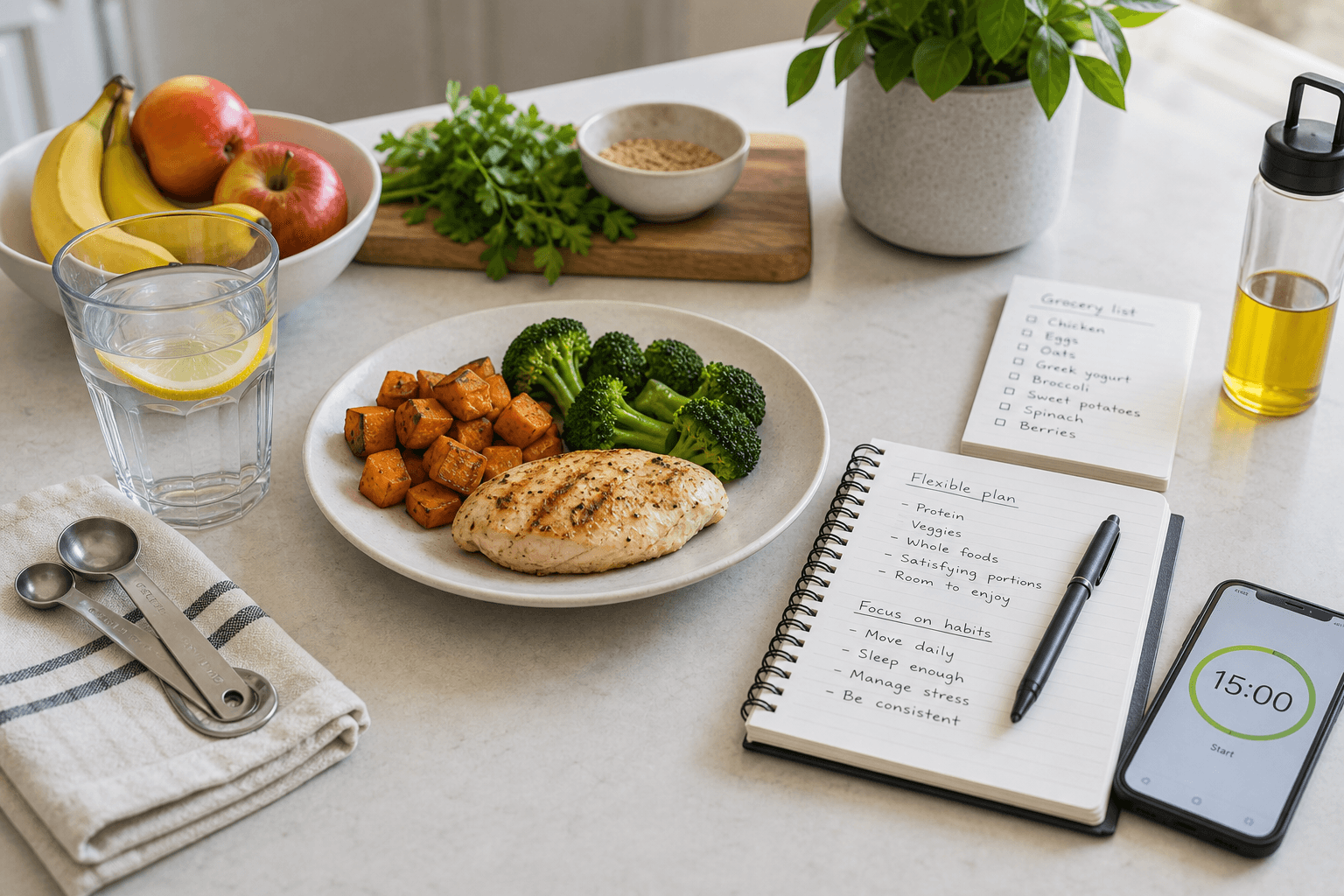
Volume eating is one of the easiest ways to make a fat-loss plan feel less punishing. The goal is not to trick yourself. The goal is to use foods with more weight, water, and fiber so meals feel substantial without silently becoming calorie bombs.
Why big-looking meals matter
A plate that looks tiny often creates the feeling that the day is already going badly. Bigger, more filling meals can reduce the urge to graze later and make restraint feel less fragile. That is especially useful for readers who are tired of white-knuckling portions.
Foods that do the heavy lifting
Volume eating usually works best with potatoes, fruit, vegetables, soup, beans, oats, Greek yogurt, lean protein, and lower-energy-density staples. These foods do not erase calories, but they do raise the odds that you finish a meal and feel like you actually ate.
- Start with protein and produce, then add fats and extras deliberately instead of automatically.
- Use fruit, potatoes, and vegetables to enlarge meals before reaching for more snack foods.
- Pay attention to sauces, oils, and crunchy add-ons that can double the meal without adding much fullness.
Where people go wrong
The common mistake is assuming that anything labeled healthy is also low in calories. Nuts, granola, dried fruit, and giant smoothies can still hit hard. Volume eating works when the bulk of the plate comes from foods that actually create fullness for the calories they bring.
Who benefits most
This approach can be especially helpful for people who like larger portions, struggle with snack-driven eating, or feel deprived on tiny diet meals. It is not mandatory, but it is a strong tool when appetite is part of the challenge.
A useful fat-loss plan does not have to look skimpy. If you can make meals feel bigger while keeping calories sane, staying consistent usually gets much easier.