Late-night snacking often gets treated like a self-control issue. More often, it is a repeatable pattern created by hunger, fatigue, habit, stress, and easy food access showing up in the same hour every day.
The answer is not automatically “never eat after dinner.” Some people are physically hungry and need a more satisfying dinner or a planned snack. Others are responding to a cue—the television turns on, the kitchen is nearby, and eating begins before a decision has really been made. The first repair is learning which pattern you have.
Why nights feel harder
At night, decision fatigue is high and structure is low. If breakfast and lunch were small, dinner was rushed, sleep has been poor, and snack foods are visible, the outcome is not mysterious. You are asking the most depleted version of yourself to solve a problem the rest of the day helped create.
NIDDK notes that people may eat for reasons other than hunger, including boredom, stress, sadness, and social cues. That does not mean the desire is fake. It means the solution depends on the trigger rather than on a universal rule about kitchen closing times.
Run a three-night pattern check
For three evenings, record the time, what you wanted, what you had eaten earlier, your physical hunger, and what was happening immediately before the urge. Keep the note neutral. “Wanted cookies after turning on the television; dinner was two hours earlier; not sure whether I was hungry” is useful data. “Failed again” is not.
Look for repetition. Does the urge appear after an underfed day? During the same show? After alcohol? While working late? After an argument? A repeated cue gives you something concrete to redesign.
Fix daytime hunger before blaming nighttime willpower
A breakfast that is skipped unintentionally, a light lunch, and a small dinner can create a real energy gap by night. Strengthen the meals with protein, fiber-rich foods, and enough total food before attempting stricter evening rules.
Do not compensate for nighttime eating by starving the next day. That can recreate the same hunger and guilt cycle. Return to normal meals, learn from the pattern, and make the next evening easier.
Separate physical hunger from an automatic cue
Physical hunger tends to make several ordinary foods sound acceptable and may build gradually. A cue-driven urge can feel sudden and highly specific. The distinction is not perfect, but pausing long enough to ask “Would I eat a normal snack right now?” can clarify what kind of response might help.
If you are hungry, eat something planned and satisfying without turning it into a moral event. If you are not hungry, change the cue sequence: move to a different room, make tea, brush your teeth, take a short walk, call someone, or start an activity that occupies your hands and attention.
Change the environment before the urge arrives
Food visibility and convenience affect behavior. Put frequent trigger foods out of sight or buy portions that do not require a nightly negotiation. Keep any planned evening option visible and easy. The goal is not to create a forbidden-food house; it is to stop arranging the kitchen for autopilot.
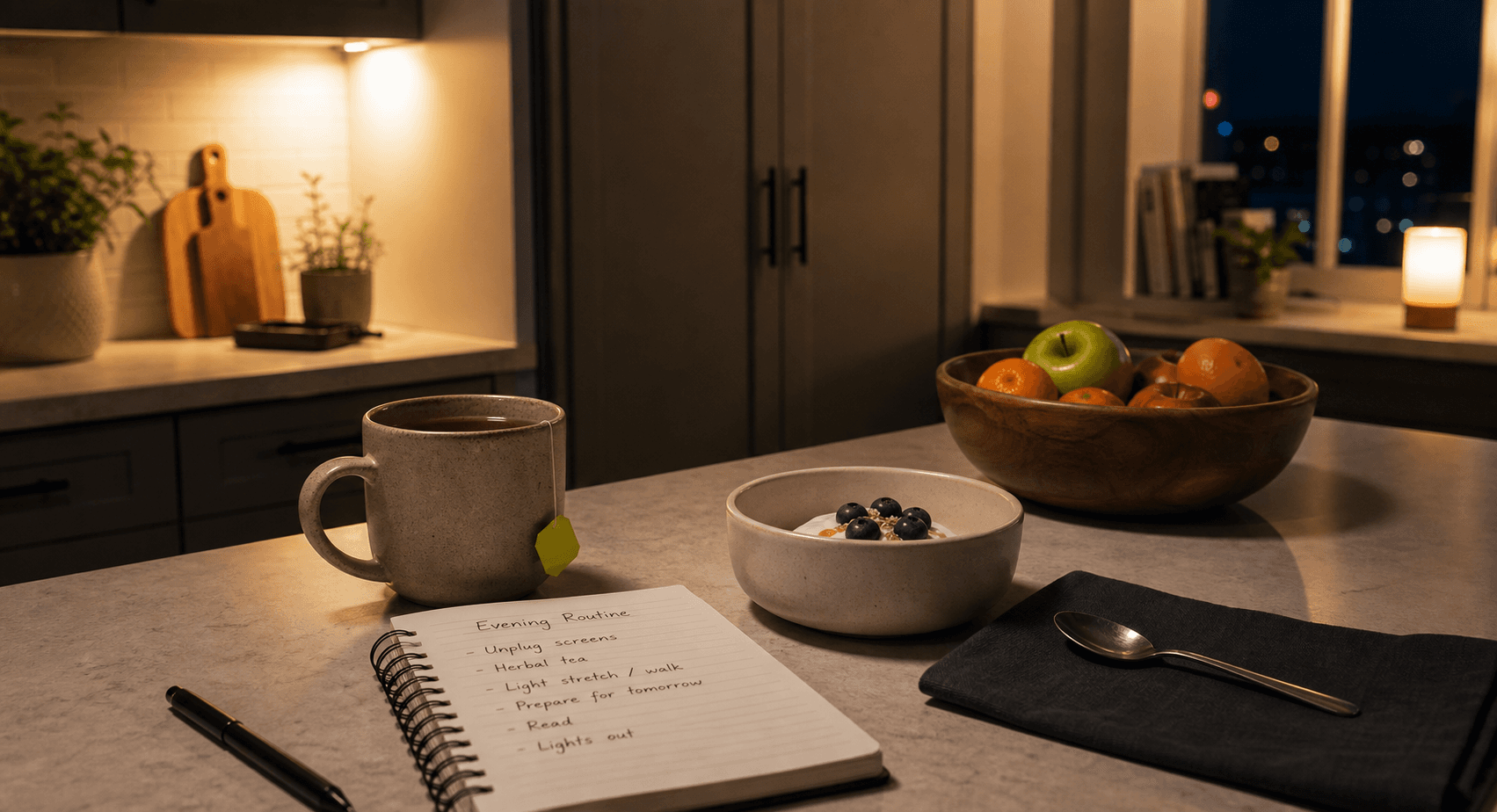
Create a transition after dinner: clear the table, prepare tomorrow’s breakfast, dim the kitchen lights, and move to another activity. A consistent closing routine gives the evening a new cue besides opening the pantry.
Build a planned snack instead of a vague ban
If dinner happens early or your schedule genuinely leaves you hungry later, plan an evening snack. Choose something you can portion and sit down to eat—such as yogurt and fruit, toast with a protein food, or another ordinary option that fits your needs.
A planned snack is different from grazing through several packages. Put it on a plate or in a bowl, eat without a screen at least occasionally, and let the eating event have a beginning and an end.
Sleep and stress belong in the plan
Short sleep creates more waking hours to eat and can make appetite and high-reward food harder to manage. A snack rule cannot compensate for chronic exhaustion. Protecting a realistic bedtime and reducing late work or screen drift may improve the entire evening pattern.
Stress also needs another outlet. Food may remain one source of comfort, but it should not be the only one available. A shower, music, a brief walk, breathing practice, or contact with another person can widen the menu of responses.
Know when this is more than a habit problem
Repeated episodes of eating a large amount with a sense of loss of control, secrecy, intense shame, purging, or compensatory restriction deserve professional support. So does waking from sleep to eat frequently or feeling unable to eat adequately during the day.
This guide is not a treatment for an eating disorder. A primary-care clinician or eating-disorder-informed registered dietitian can help determine what support is appropriate. Tightening rules on your own can make some patterns worse.
Try this seven-night reset
- Eat normal daytime meals instead of saving most of your food for night.
- Write down the trigger and hunger level when the urge first appears.
- Decide in advance what a planned evening snack would be if you are hungry.
- Put food on a plate or in a bowl and sit down to eat it.
- Use the same short kitchen-closing routine after dinner.
- Keep one non-food decompression option ready for stress or boredom.
- Review the week for patterns, not perfection.
Common questions
Is eating after a certain hour automatically bad?
No single clock time makes food harmful or guarantees weight gain. The practical issue is whether evening eating repeatedly adds unplanned intake, disrupts sleep, or reflects an unmet need earlier in the day.
Should I remove every snack food from the house?
Not necessarily. Some people benefit from reducing visibility or buying smaller quantities; strict bans make other people more preoccupied. Choose the amount of structure that reduces autopilot without creating fear or a rebound cycle.
What if I am truly hungry after dinner?
Eat a planned, ordinary snack and review whether dinner timing or composition needs adjustment. Physical hunger is information, not a character flaw.
Put this into practice
- Read the behavior-systems guide
- Use the protein target tool to strengthen meal structure
- Read the meal-prep guide for busy weeks
Sources and further reading
Aim for calmer, not perfect
The goal is not to become a robot who never wants anything after dinner. The goal is to make late-night eating less automatic, less chaotic, and more connected to actual hunger and deliberate choice.
When daytime meals, evening cues, sleep, and the food environment improve, the hardest moment no longer has to carry the whole plan.