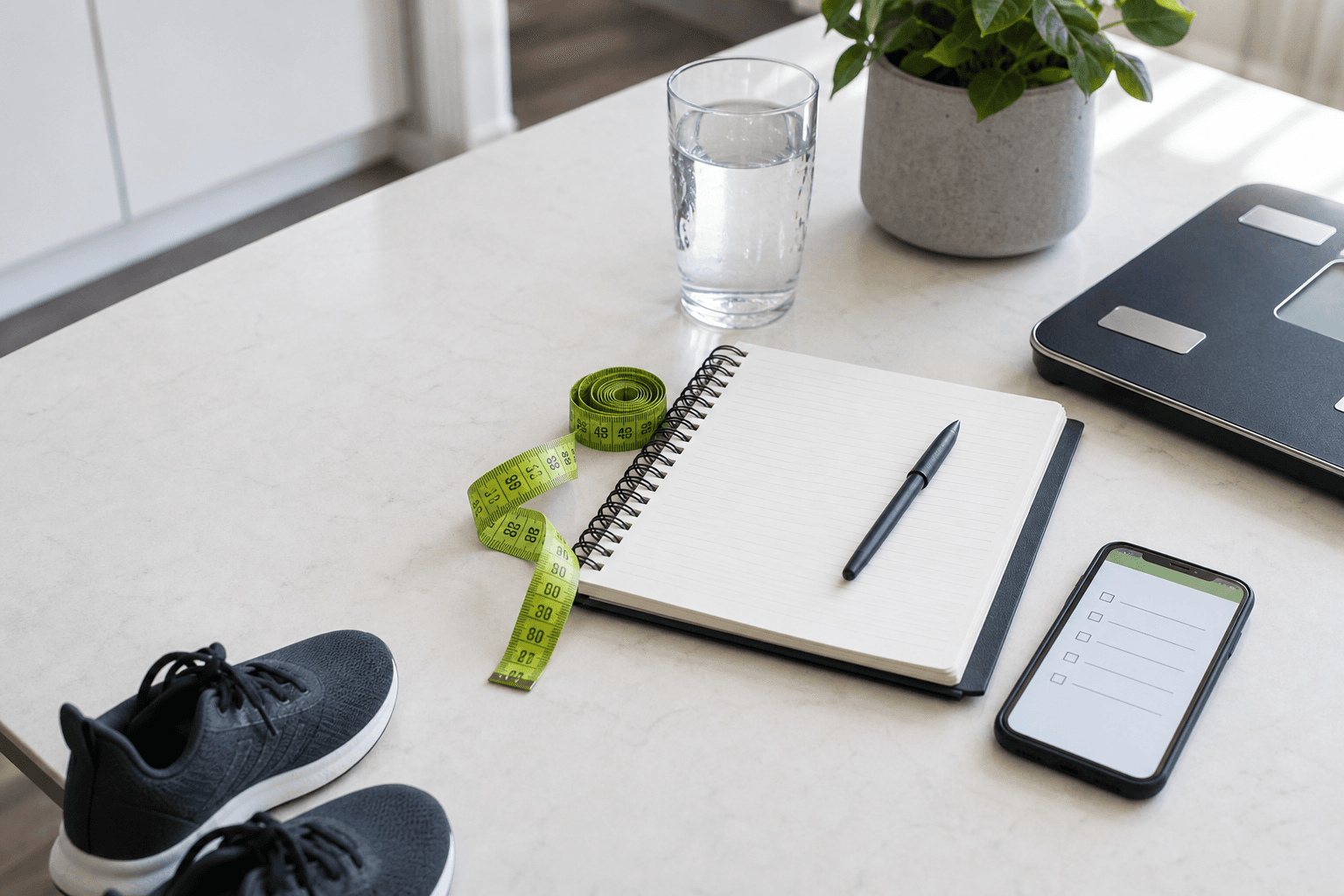
The scale is a useful tool, but it is a narrow one. It cannot tell the difference between fat, muscle, water, and what you ate yesterday. Leaning on it as the only measure of progress sets you up for frustration on the many days it refuses to cooperate, even when things are genuinely going well.
Why the scale alone misleads
Daily weight swings from water, sodium, hormones, and digestion can easily mask real fat loss for days or weeks. Judging your effort by a single noisy number invites discouragement on days that actually reflect progress.
Signals that often move first
How your clothes fit, your energy levels, your strength in workouts, your sleep, and your mood frequently shift before the scale catches up. These are not consolation prizes, they are real evidence that the plan is working.
Measurements and photos add context
Body measurements and periodic photos can reveal changes the scale hides, especially when you are building some muscle while losing fat. They give a fuller picture than weight alone and can be reassuring during a stall.
Behavior is the most controllable metric
You cannot fully control the scale on any given day, but you can control your habits. Tracking whether you hit your steps, ate enough protein, or trained keeps the focus on what actually drives results.
Run a two-week experiment
Treat this as a small experiment rather than a permanent rule. Start with one action from the checklist: Watch how clothes fit, energy, sleep, and strength alongside weight. Put it in a specific time and place, and make the minimum version easy enough to complete on a difficult day. Do not overhaul the rest of your routine at the same time.
Keep a brief record of what happened, including the situation, the action you took, and one outcome that matters for this topic. At the end of two weeks, keep what made life easier, revise what created friction, and drop what provided no useful benefit. A modest test produces better information than a dramatic three-day push.
Put the advice into practice
Choose four indicators from different domains: one behavior, one fitness marker, one daily-life marker, and one body measurement if that feels helpful. Examples include planned breakfasts completed, walking pace, ease on stairs, waist circumference, or sleep consistency. Record them on a schedule instead of collecting only the good moments.
Measure the signal that matters
Use simple, repeatable definitions. “More energy” is hard to compare; “no afternoon nap on four workdays” is clearer. Review trends monthly, because many meaningful changes move slowly. Keep weight in the dashboard if it is useful, but do not let one noisy number overrule every other piece of evidence.
Know the limits and safety boundaries
A non-scale victory should not become another perfection contest. Pick a few markers that connect to the life you want and retire ones that create anxiety or do not matter. Medical outcomes such as blood pressure or laboratory results need appropriate equipment and professional interpretation rather than guesses from how you feel.
A simple way to start
- Watch how clothes fit, energy, sleep, and strength alongside weight.
- Use measurements or photos to catch changes the scale misses.
- Track your habits, the part you can actually control.
Common questions
Which non-scale measures are most useful?
The best measures are meaningful, repeatable, and responsive to your actions. A consistent waist measurement, a regular walking route, or the number of planned meals completed usually provides better information than vague mood ratings or constantly changing tests.
Can I stop weighing myself completely?
Yes. Weight is optional data, not an obligation. If it causes distress or unhelpful behavior, use other health and habit measures or discuss monitoring with a clinician. If weight is medically important, your care team can help choose a frequency and context that is appropriate.
What if tracking or changing this behavior makes food more stressful?
Scale the exercise back or stop it. A useful habit should provide information without creating fear, shame, or obsessive checking. Persistent loss-of-control eating, severe restriction, purging, or distress around food deserves support from an eating-disorder-informed clinician.
Put this into practice
- Build a behavior system that survives real life
- Use the free weight-loss tools
- Practice mindful eating
Sources and further reading
- CDC: Steps for Losing Weight
- NIDDK: Changing Your Habits for Better Health
- NIDDK: Health Tips for Adults
What to watch
Keep the scale if it helps, but do not let it be the only judge. A wider set of signals gives a truer, kinder, and more motivating picture of how far you are coming.