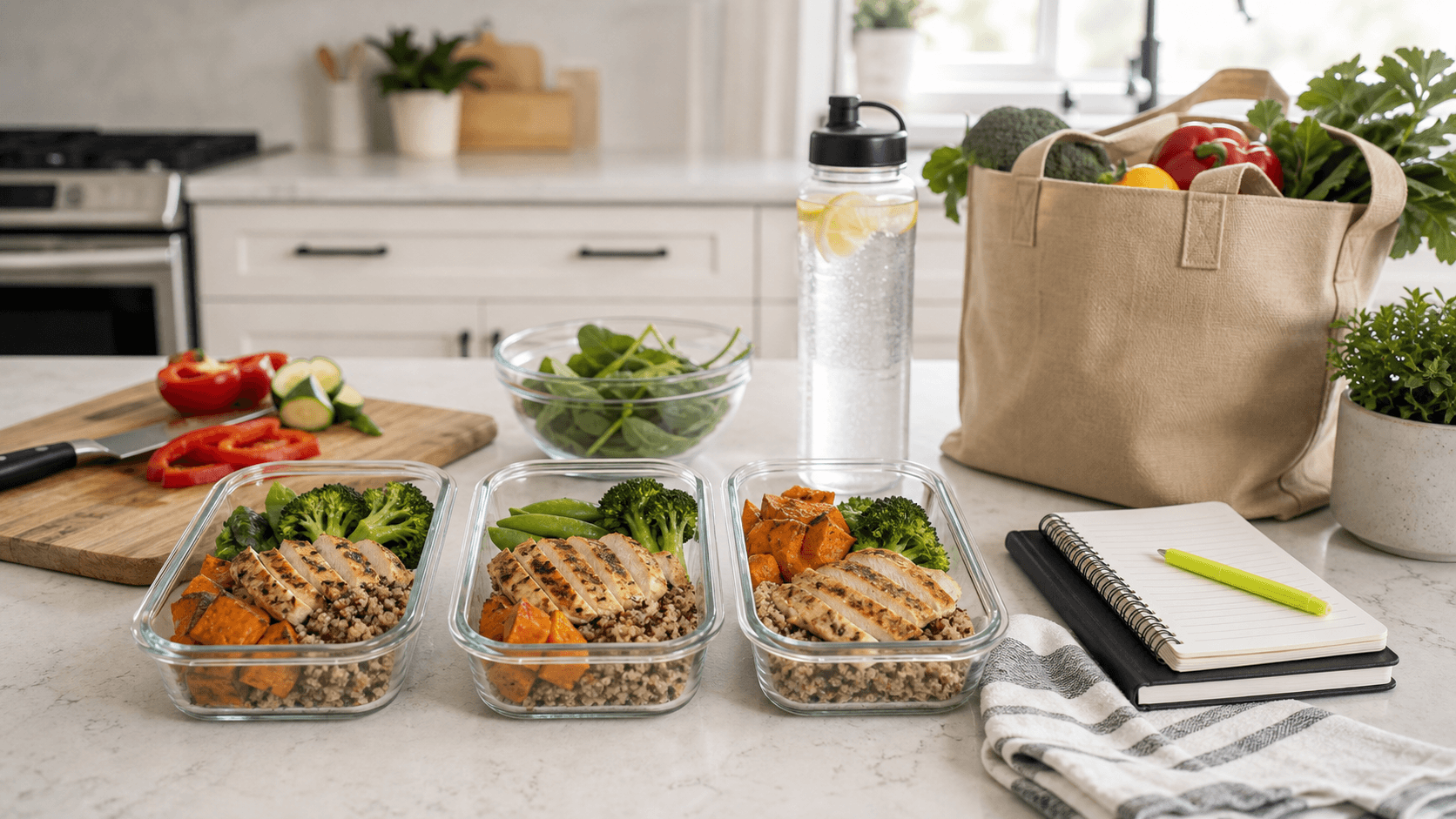
Meal prep is not about becoming a person who loves identical containers on a Sunday afternoon. It is about making sure the easiest food choice on a hard day is not the one that blows up the plan.
What meal prep really solves
Meal prep lowers friction. It reduces the number of moments where stress, hunger, and convenience collide. That makes it a behavior tool as much as a food tool.
The lightest useful version
You do not need seven perfect meals lined up in the fridge. You might just need cooked protein, a few starch options, washed produce, and two emergency fallback meals that keep dinner from turning into chaos.
- Prep ingredients that can become multiple meals instead of forcing one exact menu.
- Keep fast defaults ready for your busiest day, not just your best day.
- Design the system around your real workweek, commute, and energy level.
Why elaborate prep often backfires
Highly rigid meal prep fails when boredom, schedule changes, or food waste make the whole setup feel expensive and annoying. A flexible system usually lasts longer because it can survive normal disruption.
What to prep first
Start with the meals that go wrong most often. If lunch becomes random every weekday, fix lunch first. If late dinners cause overeating, create a calmer dinner default before trying to optimize everything else.
Meal prep works best when it reduces bad decisions without demanding a second full-time job. Lighter structure usually beats perfect structure.