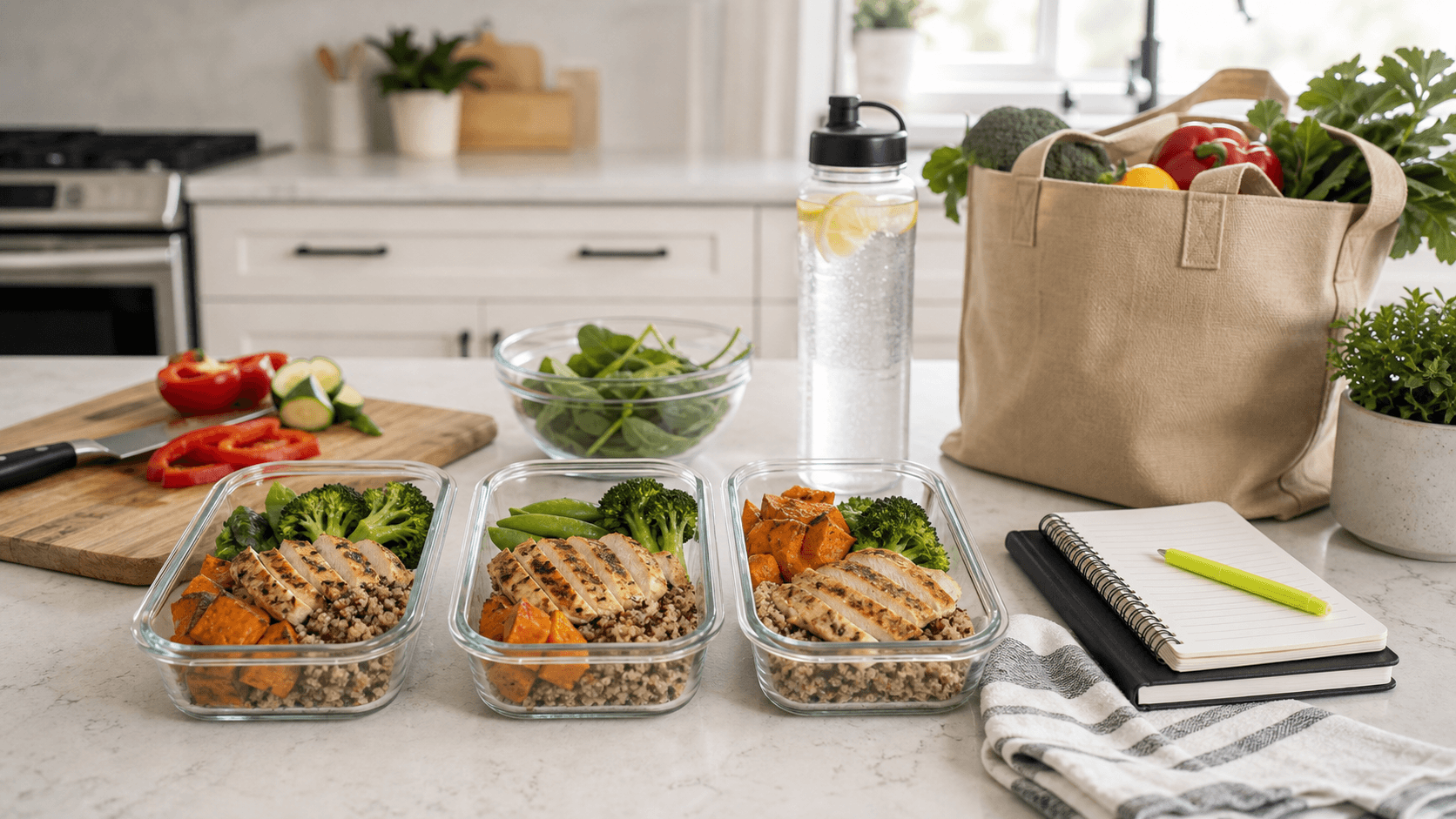
A surprising amount of your week’s eating is decided at the grocery store, not in the moment of hunger. What you bring home becomes what is available, and what is available becomes what you eat. A little structure at the store removes dozens of hard decisions later, when willpower is lower.
Shop from a short list, not vibes
Wandering the aisles hungry and undecided is how impulse buys end up in the cart. A simple list built around a few planned meals keeps the trip focused and dramatically cuts the random additions that derail the week.
Stock the defaults you want to reach for
Filling the cart with easy proteins, produce, and a few reliable staples means the convenient options at home are also the helpful ones. The kitchen ends up nudging you toward better choices automatically.
Be honest about trigger foods
There is no rule that you must keep your most overeaten foods in the house at all times. Buying them rarely, or in single servings rather than family-size, respects that home is where willpower is weakest.
Do not shop on an empty stomach
Shopping while hungry reliably leads to more impulsive, calorie-dense purchases. A small snack beforehand, or shopping after a meal, keeps your decisions in the store closer to the ones your calmer self would make.
Run a two-week experiment
Treat this as a small experiment rather than a permanent rule. Start with one action from the checklist: Build a short list around a few planned meals before you go. Put it in a specific time and place, and make the minimum version easy enough to complete on a difficult day. Do not overhaul the rest of your routine at the same time.
Keep a brief record of what happened, including the situation, the action you took, and one outcome that matters for this topic. At the end of two weeks, keep what made life easier, revise what created friction, and drop what provided no useful benefit. A modest test produces better information than a dramatic three-day push.
Put the advice into practice
Build the list from five repeatable meals and two satisfying snacks before adding extras. Check the calendar for late workdays, social meals, and leftovers, then buy quantities that match the actual week. Include at least one emergency meal requiring almost no preparation so takeout is a choice rather than the only available plan.
Measure the signal that matters
At the next shopping trip, review what ran out early, spoiled, or remained untouched. Those three signals reveal whether the list matched hunger, schedule, and preferences. Improve one category at a time. The goal is not the most virtuous cart; it is food that becomes planned meals before it becomes waste.
Know the limits and safety boundaries
Budget, transportation, storage, cooking access, allergies, and household preferences shape what is realistic. Frozen and canned foods can be practical choices, and store brands often do the same job. Do not interpret a constrained food environment as lack of commitment; design around available resources and seek local assistance when needed.
A simple way to start
- Build a short list around a few planned meals before you go.
- Stock the easy defaults you actually want to reach for.
- Buy trigger foods rarely and in small portions, and never shop hungry.
Common questions
Is it always bad to shop while hungry?
Hunger can make impulse food more persuasive, but the effect is not destiny. If you must shop hungry, use a written list, begin with planned staples, and eat a portable snack beforehand when possible. A repeatable system matters more than perfect shopping conditions.
How do I plan when my family eats differently?
Use shared building blocks—protein, vegetables, grains, sauces—and let people assemble or season them differently. Keep one or two personal defaults for breakfasts and lunches. The plan should reduce separate cooking rather than requiring an entirely different menu for each person.
What if tracking or changing this behavior makes food more stressful?
Scale the exercise back or stop it. A useful habit should provide information without creating fear, shame, or obsessive checking. Persistent loss-of-control eating, severe restriction, purging, or distress around food deserves support from an eating-disorder-informed clinician.
Put this into practice
- Build a behavior system that survives real life
- Use the free weight-loss tools
- Practice mindful eating
Sources and further reading
- NIDDK: Health Tips for Adults
- NIDDK: Food Portions—Choosing Just Enough for You
- CDC: Steps for Losing Weight
What to watch
The grocery store is upstream of almost everything you eat at home. Spend a little structure there and you spend far less willpower the rest of the week.