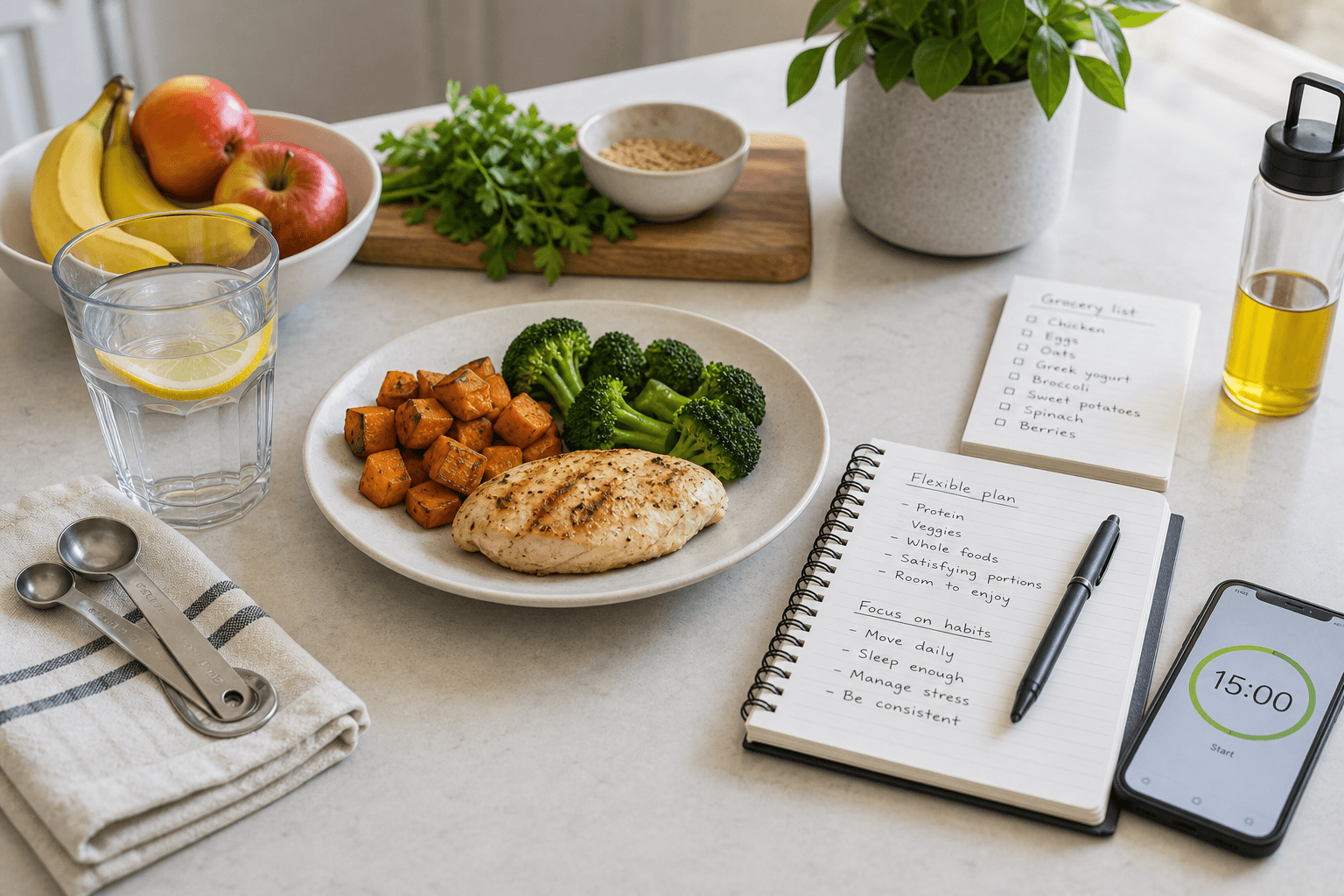
A calorie deficit sounds technical, but the useful version is simple: over time, your body must use more energy than arrives from food and drinks. That does not require an app, a food scale at every meal, or a life built around nutrition math.
The goal is not to make every day as low-calorie as possible. It is to build a modest gap you can repeat without feeling constantly hungry, preoccupied with food, or ready to abandon the plan by the weekend. Weekly patterns matter more than one unusually light meal or one unusually heavy day.
What a calorie deficit actually means
Your body uses energy to stay alive, move, digest food, and support normal daily activity. When average intake stays above that demand, weight tends to rise; when it stays below that demand, weight tends to fall. The calculation is real, but the inputs are noisy. Hunger, movement, water retention, medications, sleep, and changing body size all affect what the scale does from one week to the next.
That is why a deficit should be treated as a direction, not a punishment. A smaller adjustment that survives restaurants, workdays, and family life is usually more useful than an aggressive cut that creates fatigue and rebound eating.
Tracking is a tool, not a requirement
Food logging can reveal patterns and portions that are otherwise easy to miss. It can also become tedious, socially awkward, or overly consuming. If tracking helps you learn without making food feel like a daily exam, use it. If it reliably makes the plan harder to live with, use a lower-friction structure instead.
A no-tracking approach still needs feedback. Repeated meals, consistent portions, weekly weigh-in trends, waist measurements, and notes about hunger or energy can show whether the system is working. “Not tracking” should mean using simpler signals, not flying blind.
Build a repeatable plate before cutting portions
Start with meals that have a recognizable protein source, a generous produce component, and a portion of starch or another satisfying carbohydrate. Add fats, sauces, cheese, and extras deliberately rather than letting them accumulate unnoticed. This creates structure without requiring exact numbers.
The plate does not have to look identical at every meal. Breakfast might be yogurt, fruit, and oats. Lunch might be chicken, rice, and vegetables. Dinner might be beans, potatoes, and a salad. The useful pattern is that the meal has enough substance to prevent the next decision from happening in a state of emergency.
Audit the least satisfying calories first
Before shrinking meals, look for calories that add little satisfaction: sweet drinks you barely notice, grazing while cooking, large restaurant add-ons, oils poured without thinking, or snacks eaten directly from a bag. Removing one or two automatic extras is often easier than making every meal smaller.
Keep the items that matter to you. A planned dessert you enjoy is different from three forgotten handfuls eaten while standing in the kitchen. The point is not to make food joyless. It is to spend your calorie budget on choices you would make again on purpose.
What a no-tracking day can look like
Use two or three dependable meal templates and one planned snack option. Keep the first serving consistent, sit down to eat it, and wait before deciding on more. At restaurants, decide whether the appetizer, drink, or dessert matters most instead of ordering all three automatically.
This is not a prescribed menu. It is a decision system: fewer unplanned calories, meals with enough staying power, and fewer moments where intense hunger makes the choice for you.
How to tell whether the deficit is working
Use several weeks of information. Body weight can move because of sodium, carbohydrate intake, digestion, hormones, and hydration, so one weigh-in proves very little. Compare similar conditions and look at the trend. Also watch whether your clothing, waist, energy, and ability to follow the plan are changing.
If nothing changes after a consistent stretch, adjust one repeatable variable: reduce a frequent extra, tighten a restaurant habit, or add a manageable amount of activity. Avoid rewriting the entire plan after every flat week.
When a simpler plan needs professional help
Seek individualized guidance if you are pregnant, under 18, managing diabetes or another condition affected by food intake, taking medication that changes appetite or weight, or have a history of disordered eating. Persistent dizziness, weakness, loss-of-control eating, or an increasing fear of food are reasons to stop tightening the plan and talk with a qualified clinician.
A safe plan should leave room for normal life and adequate nutrition. If success requires constant hunger, secrecy, or ignoring physical warning signs, the deficit is not modest enough.
Try this seven-day no-tracking experiment
- Choose two breakfasts and two lunches you can repeat without resentment.
- Build each main meal around protein, produce, and a satisfying carbohydrate.
- Put snacks on a plate or in a bowl instead of eating from the package.
- Choose water or an unsweetened drink for the beverages you do not care much about.
- Pause after the first serving and decide whether you are still physically hungry.
- Record hunger, energy, and any unplanned eating in one sentence each evening.
- Review the week for one pattern to keep and one adjustment to test next.
Common questions
Can you lose weight without counting calories?
Yes. Counting is one way to create awareness, but consistent meal structure, portion defaults, beverage choices, and reduced grazing can also lower average intake. You still need a feedback loop so you can adjust if the trend is not moving.
How fast should the scale change?
There is no single pace that fits everyone. Body size, health, medications, and the size of the deficit all matter. A slower trend that preserves energy and adherence is often more useful than chasing a dramatic weekly number.
What if I am hungry all day?
First strengthen the meals: add protein, fiber-rich foods, and enough total food to make them satisfying. Review sleep and meal timing too. If persistent hunger remains severe, do not keep cutting; discuss the plan with a registered dietitian or clinician.
Put this into practice
- Use the free weight-loss snapshot and protein target
- Read the high-protein weight-loss guide
- Read the volume-eating guide
Sources and further reading
- NIDDK: Factors Affecting Weight and Health
- NIDDK: Changing Your Habits for Better Health
- CDC: Tips for Healthy Eating for a Healthy Weight
The useful version is deliberately boring
Judge progress over a few weeks, not one emotional weigh-in. Energy, hunger, adherence, and consistency matter along with scale changes. If the plan is making you miserable, it is usually too aggressive or too fragile.
A no-tracking deficit works best when the same few useful decisions happen often enough that they stop feeling like decisions. Less food math, fewer automatic extras, and a routine you can still recognize on a busy Friday.